

Dopamine isn't the happiness hormone. It drives motivation, and it fires before the actual event even happens. Understand how the system works, and you understand why some days feel easy and others feel like climbing a mountain.
Dopamine isn't the happiness hormone
A simple example: you're hungry and want to eat. You google the nearest restaurant. A döner place with 4.7 stars pops up nearby. Dopamine fires. You see it's a 6-minute bike ride instead of 31 minutes by train. Dopamine fires. You get there, the line is short. Dopamine fires.
Dopamine gets produced before the actual event happens. Evolutionarily, that's easy to explain: on a mammoth hunt, spotting a footprint could release new energy and help secure survival.
Our dopamine system doesn't just work for survival, it works for any kind of goal. Get a step closer to a goal, and dopamine fires to keep you going. That's why even the biggest challenges start to feel doable. Without dopamine, even writing an email can feel like climbing a mountain.
So the question is: how do you put this system to work so everything feels a bit easier?
The dopamine baseline paradox
If dopamine gives you that much drive, why not chase as much of it as possible? That's basically how our modern world works. Social media, sugar, fast food, alcohol, nicotine, streaming, porn. All of it releases dopamine.
The problem: after the release, the level doesn't stay put, it drops again, usually below where it started. How fast it drops depends on how fast it rose. And that's exactly the trap. Modern dopamine sources cause an immediate spike that feels great for a moment, then your level falls below baseline and you feel empty and unmotivated. The only way out feels like more: one more piece of chocolate, one more beer, one more cigarette, keep scrolling. That's a business model, and it's no coincidence our modern world is built on it.
Picture your dopamine reserve like a swimming pool. The more waves in the pool (dopamine spikes), the more water splashes out. The overall level drops, and eventually the reserve runs empty and you feel burned out. Artificial dopamine isn't just a problem because it's addictive, it's also a problem because your receptors go numb. Dopamine from natural sources, from actually reaching your own goals, barely registers anymore.
There are ways to raise your dopamine level without triggering unhealthy spikes.
The dopamine schedule
There are ways to trigger dopamine naturally without a crash afterward, and they fit easily into a daily routine. I call this the dopamine schedule.
- Hydration
Start the day with at least 0.5 l of water and electrolytes. You dehydrate overnight, and mornings need to make up for it.
- Morning walk
Movement and sunlight trigger dopamine. Dopamine drives a natural cortisol release, and cortisol is what wakes you up.
- Cold shower
Up to 250% more dopamine for up to 4 hours, backed by research on cold-water immersion (see sources below).
- Breakfast
Protein is the base material for dopamine production. As a rule of thumb: 1.5 to 2 g of protein per kg of body weight a day.
- Coffee
Wait at least 2 hours after waking up. Caffeine blocks the receptors that clear adenosine, and if adenosine isn't cleared, the midday slump is close to guaranteed.
- Digital sunrise
Wait at least 2 hours before touching your phone, or at least before social media or news. Your brain shouldn't learn that the first input of the day is an artificial dopamine hit.
Dopafy: my first product
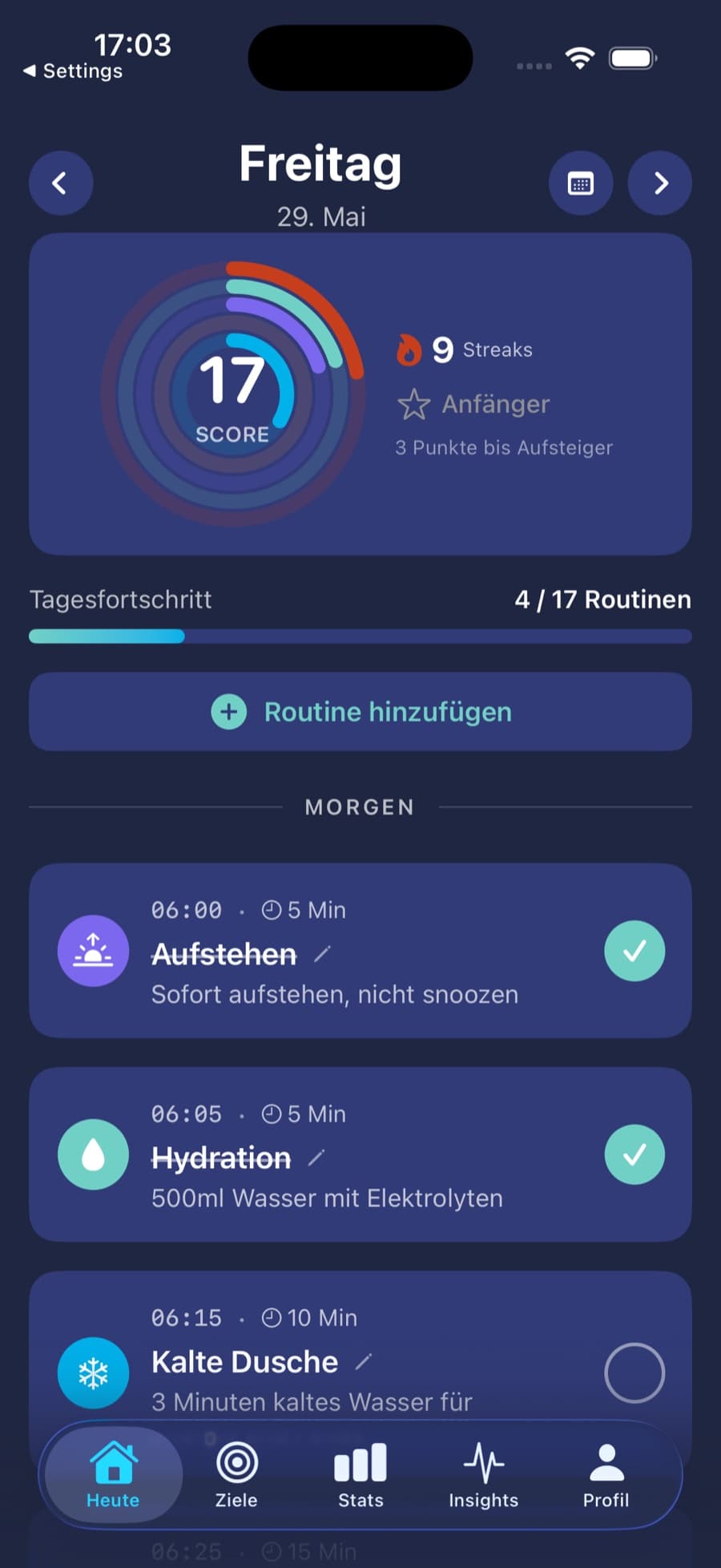
My first product, Dopafy, is built exactly for this: how do you manage your dopamine budget to raise your energy and focus? The app tracks your routines, learns from your patterns, and shows where your biggest lever is.
- Personalized routines. Plan your day so your dopamine level stays in the optimal range.
- Screen time & app blocking. Lock the apps that drain your dopamine reserves, before artificial dopamine turns into a habit.
- AI analysis & recommendations. See how small changes in your day shift your behavior, energy, focus, and wellbeing.
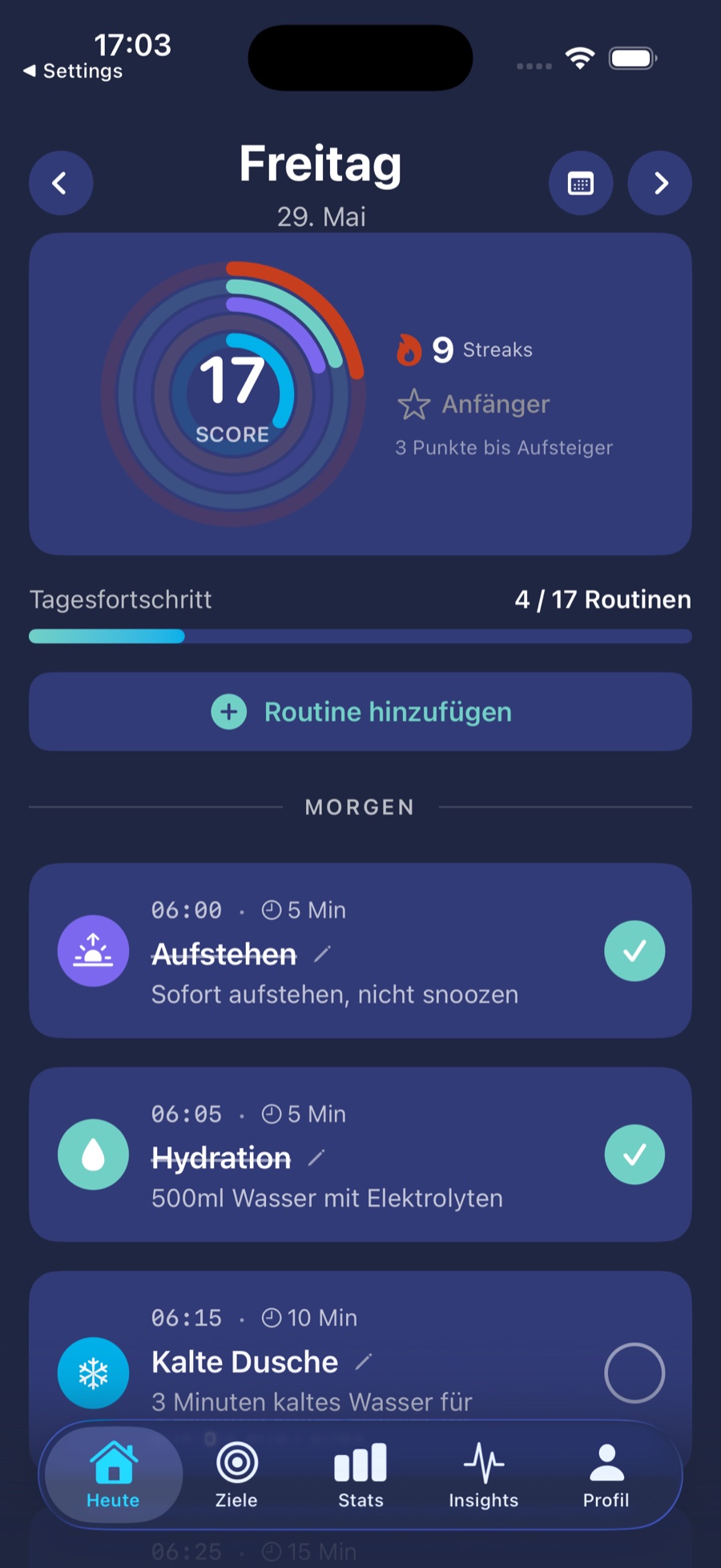
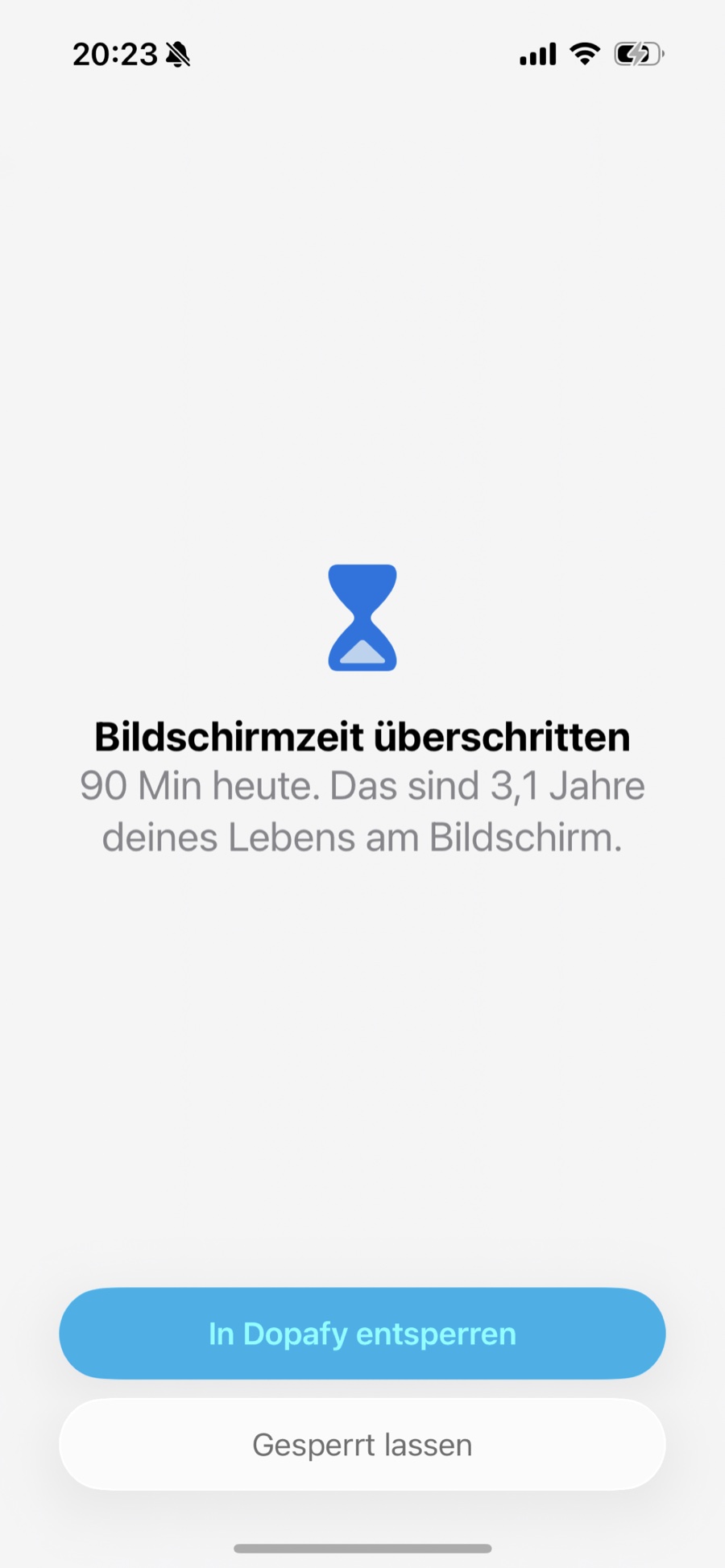
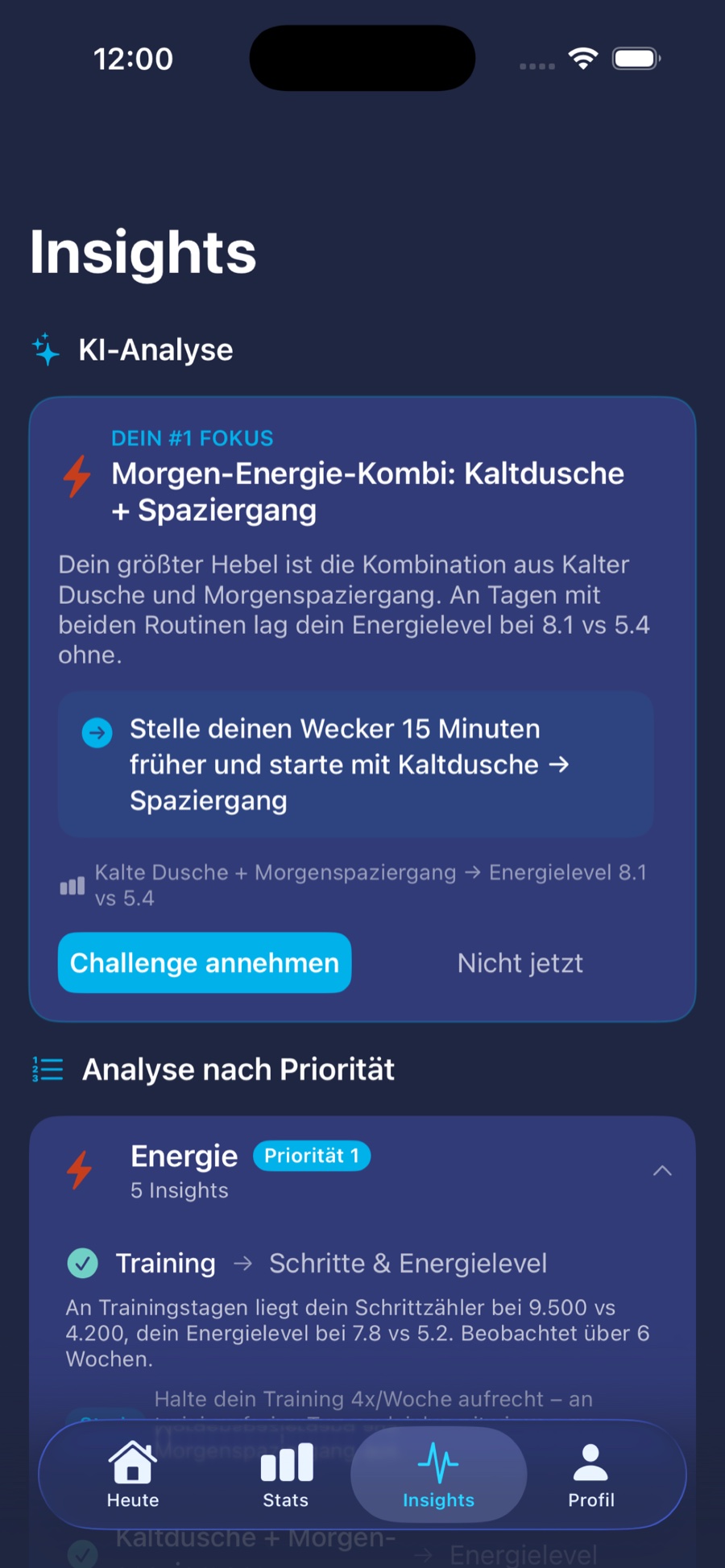
The data the app collects stays on your phone and never reaches our servers, a deliberate design choice to keep the barrier to using it low. Best to check it out yourself at dopafy.app or download Dopafy on the App Store.
This month's challenge
Try to build three habits this month that support your dopamine balance. No phone in the morning, no sugar, cold showers, a morning walk, just pick three. Get through the first 30 days and the next 30 get easier. After 66 days, a routine turns into a habit and usually stops taking willpower.
And if dopamine isn't your thing: build your first product with AI. What you build doesn't matter, starting does. Every step is at Build products with AI.
Stay curious,
Alex
Classic post-exit depression is tied to the dopamine system too, by the way. It shows how sensitive the system is, and that artificial sources aren't the only ones that can trigger a crash.
Sources
On the science of dopamine:
- Anna Lembke: Dopamine Nation. Finding Balance in the Age of Indulgence, Dutton, 2021.
- Andrew Huberman: Huberman Lab Podcast, esp. "Controlling Your Dopamine For Motivation, Focus & Satisfaction" and "Leverage Dopamine to Overcome Procrastination & Optimize Effort", hubermanlab.com.
- Robert M. Sapolsky: Behave. The Biology of Humans at Our Best and Worst, Penguin Press, 2017, chapter on the mesolimbic dopamine system.
On cold exposure (250% dopamine):
- Šrámek, P., Šimečková, M., Janský, L., Šavlíková, J., & Vybíral, S. (2000): Human physiological responses to immersion into water of different temperatures. European Journal of Applied Physiology, 81(5), 436–442.
On habit formation (66 days):
- Lally, P., van Jaarsveld, C. H. M., Potts, H. W. W., & Wardle, J. (2010): How are habits formed: Modelling habit formation in the real world. European Journal of Social Psychology, 40(6), 998–1009.
On sunlight, cortisol, and adenosine:
- Walker, M.: Why We Sleep, Scribner, 2017, chapter on the adenosine system.
- Huberman Lab Podcast: "Using Light (Sunlight, Blue Light & Red Light) to Optimize Health."