

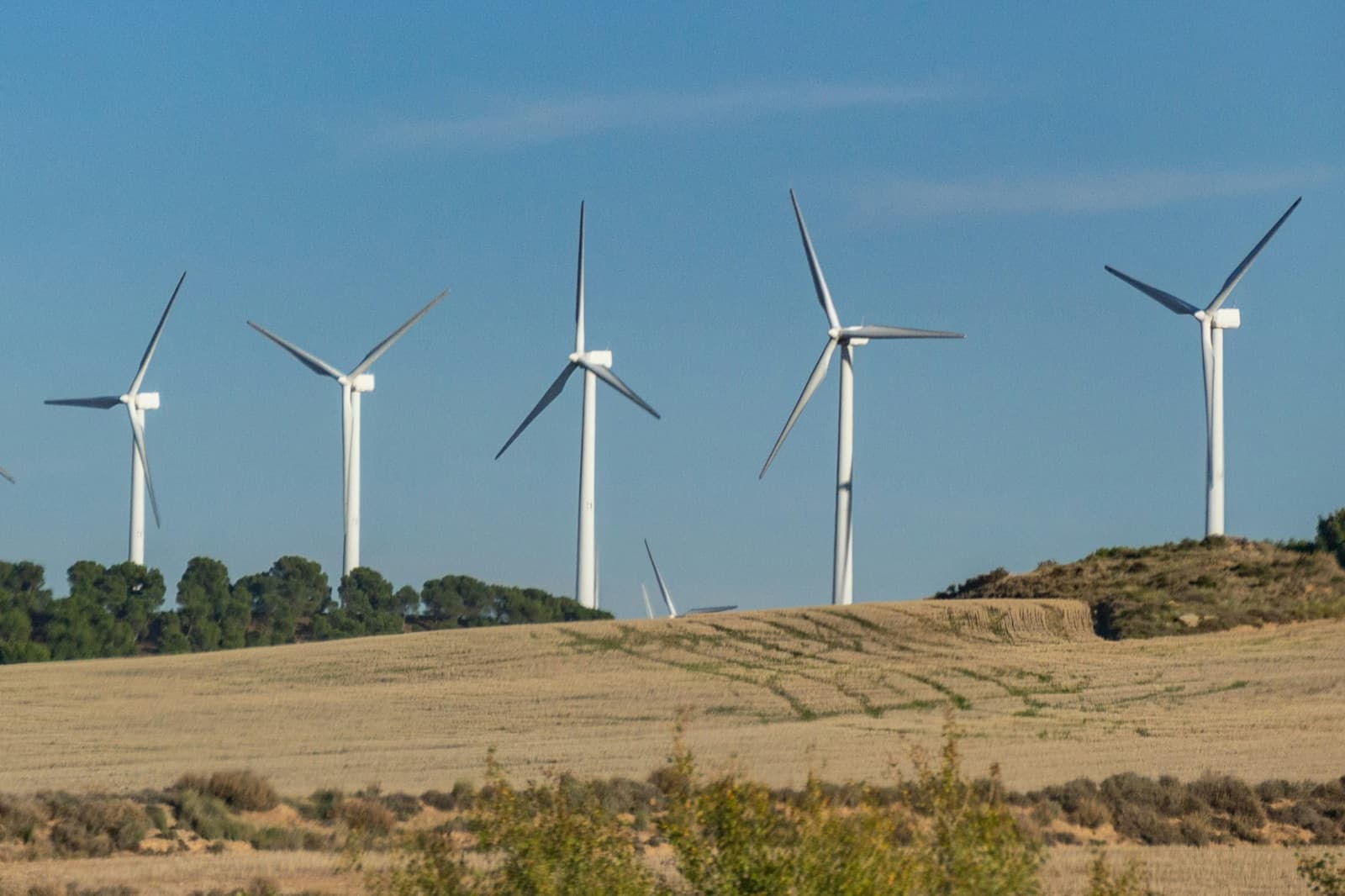
We thought hard about whether to write about sustainability on an AI-focused site. The answer: yes. Because the topic shows up in every life area: finance (energy cost), career (which industries grow, which shrink), politics (what gets regulated), consumption. No moralising here — just numbers, levers, and a calculator that points you to the right places without making you feel guilty.
The AI consensus
Ask ChatGPT, Claude, Gemini, Grok, Perplexity or DeepSeek what the biggest threat to humanity is, and they all give the same answer: climate change.
We don't want to make moralising content. But if we look soberly at which areas affect our lives, we have to talk about sustainability. Today the effects might not be visible everywhere. In a few years that will change. So we better talk about it today.
Global Risk Report
According to the World Economic Forum, 7 of the 10 biggest long-term risks are climate-related:
- Extreme weather events
Floods, droughts, storms — more frequent, more severe.
- Earth-system tipping points
Permafrost, Gulf Stream, ice sheets — changes that can't be reversed.
- Biodiversity loss
Species extinction at a rate not seen in 65 million years.
- Scarcity of natural resources
Water, soil, raw materials — finite, but we manage them as if they were infinite.
- Involuntary migration
Climate refugees will affect millions of people in coming decades.
The 1-ton target
Today: average of 8-10 tons CO₂ per person per year in Germany.
Target by 2050: 1 ton → a reduction of 87 %.
Your CO₂ footprint
Find out roughly how much CO₂ you generate, and where your biggest savings potential lies.
Your estimated CO₂ footprint
7.6 tons CO₂/year
Target by 2050: 1 ton per person
Biggest savings potential
- You drive 10.000 km/year by car. Driving less or switching to an EV saves CO₂ and fuel cost.
- Switch to green electricity — often even cheaper than the default tariff.
- Lowering room temperature by 1 °C saves about 6 % heating cost and CO₂.
- Consume more consciously: second-hand, repair instead of replacing.
"Technology will fix this"
Maybe you think technology will solve the problem — electric cars, green hydrogen, carbon capture. And yes, technological progress is a big lever. But the reality: we can't wait for someone else to solve it. Every individual can do something today, often without giving anything up, sometimes even saving money.
10 tips for less CO₂ in everyday life
Small changes, big impact. Here are 10 concrete actions with estimated savings — in CO₂ as well as euros.
Chapter 1: Digital & shopping
- Use Ecosia instead of Google
Ecosia plants trees with ad revenue. Each search offsets about 0.5 kg CO₂. At 3-4 searches a day: ~550-730 kg CO₂/year offset.
- Clean up newsletters
Every unread email consumes server energy. Unsubscribing from 100 unnecessary newsletters saves about ~30 kg CO₂/year and clears your inbox.
- Bundle orders instead of single parcels
Each parcel produces about 0.6 kg CO₂. Combining 2 weekly orders into one saves ~30 kg CO₂/year and ~€50 shipping cost.
Chapter 2: Home & energy
- Lower heating by 1 °C
Each degree saves about 6 % heating energy. For an average flat: ~300 kg CO₂/year and ~€100-150 heating cost.
- Air-dry laundry
A dryer uses around 3.5 kWh per load. At 3 loads/week: ~250 kg CO₂/year and ~€180 in electricity.
- Switch off standby devices
Standby usage in an average household: 300-400 kWh/year. Power strips with switches save ~150 kg CO₂/year and ~€100.
- Wash at 30 °C
80 % of washing energy goes into heating water. 30 °C instead of 60 °C saves around 60 % per cycle. That's ~100 kg CO₂/year and ~€40.
Chapter 3: Consumption & daily life
- Tap water instead of bottled
German tap water is drinking-water quality. Switching 1.5 L/day saves ~100 kg CO₂/year (transport, plastic) and ~€200 per person.
- Best-before ≠ expiry date
In Germany, 75 kg of food per person per year ends up in the bin. Smarter shopping and reading best-before dates correctly saves ~100 kg CO₂/year and ~€130.
- Refurbished instead of new
A new smartphone causes about 70 kg CO₂. Refurbished saves up to 80 % of that. For phone + laptop every 3 years: ~50 kg CO₂/year and up to €500 per device.
All 10 tips together save about ~1,600 kg CO₂ per year — almost 20 % of the German average. Plus around ~€800 in savings. Sustainability and saving money aren't opposites.
Our content recommendations
Utopia — living more sustainably
The best German-language platform for sustainable consumption, recipes and inspiration. Concrete tips instead of moralising. (German)